
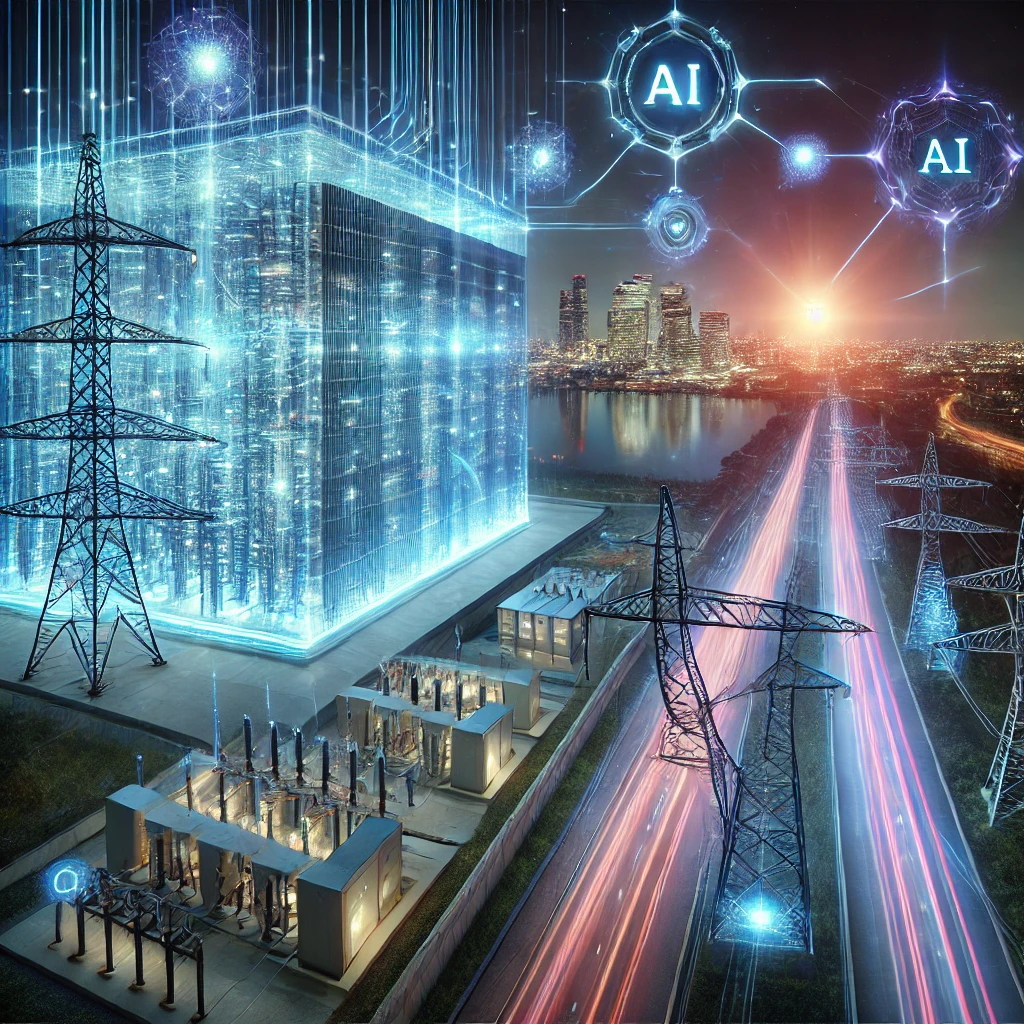
A recent study from Bain and Company indicates that utilities will need to increase generation by 26% by 2028. After a couple of decades of flat load demand, we see a significant shift in demand. There seems to be even faster demand growth behind it. AI is the biggest contributor to growth at 44% of the expected demand growth. It is also having the most impact on how utilities respond. It was the least planned for since it was a non-factor until the breakthroughs in 2022 and running a utility involves a lot of planning.
We are also putting increasingly serious efforts into re-industrializing the US economy, so manufacturing is expected to add 17% to the demand growth. On top of that we also have a population that continues to grow adding another 27% of the growth from residential consumption. This growth in demand is a stark contrast to the 5% growth the power industry saw over two decades from 2003 to 2023. Utilities and the energy industry that supports them face a step change, right now.
Utilities and most of the underlying suppliers that support them are not designed to deal with a step change in demand. This conflict between sharp demand growth and an industry that is used to enjoying long planning horizons over decades looks to cause some significant price impacts. Bain’s study estimates that utilities will need between 10-20% more revenue per year to fund the $2 trillion in capital required for the build out, which is a nice way of saying our prices are going up.
All of this inspired Neil Chatterjee, a former chairman of the Federal Energy Regulatory Commission to link AI to climate change mitigation efforts, “I really think the climate case for AI needs to be made.” The former chairman highlights efforts from AiDash, where he recently joined the board, “AI can actually advance the clean energy transition and mitigate climate change risk.” He points to AiDash’s capabilities to monitor vegetation management, ie keeping trees off the lines, as part of their satellite monitoring services focused on utility infrastructure. Sure, I can see where this can be helpful, but more than anything else it just seems to be a good example of “talking your book”.
I think such efforts to show that AI can contribute to a cleaner grid are unnecessarily abstract and complicated. The far simpler answer is that with a step change in new demand growth the utility industry will have to build out massive new generation capacity to meet the growth. This looks to be a combination of renewables, nuclear and natural gas. As these resources come online they will lower the carbon intensity of our grid and bring newer more efficient capacity into our grid at a far faster pace than could every be achieved by simply waiting to retire older, dirtier, less efficient plants in an environment of no growth.
New demand growth will drive new investments. The new investments are 20-40 years ahead in technology. They are cleaner and more efficient because they are new and improved. It need be no more complicated than that simple reality.



 Thinking On Energy
Leave a comment