
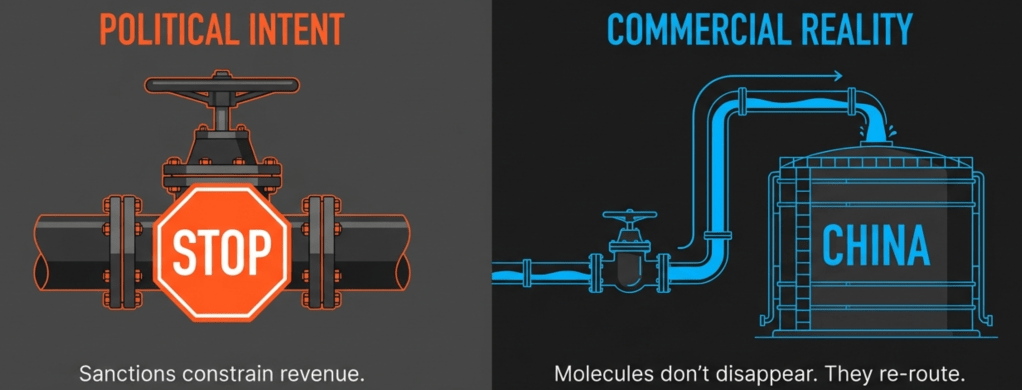
As Western policy makers continue to apply pressure on Russian and Iranian energy exports, the intent is clear: constrain revenue, limit strategic leverage, and reshape global energy behavior. But energy markets have a way of absorbing pressure and redistributing consequences. Molecules don’t disappear they just reroute.
The result is an increasingly visible pattern: China is emerging as the primary beneficiary of discounted Russian and Iranian crude, even as it continues to export excess manufacturing capacity into global markets. This is not just a geopolitical story. It is an industrial competitiveness story with direct implications for energy-intensive businesses across the West.
Discounted Barrels, Concentrated Flows
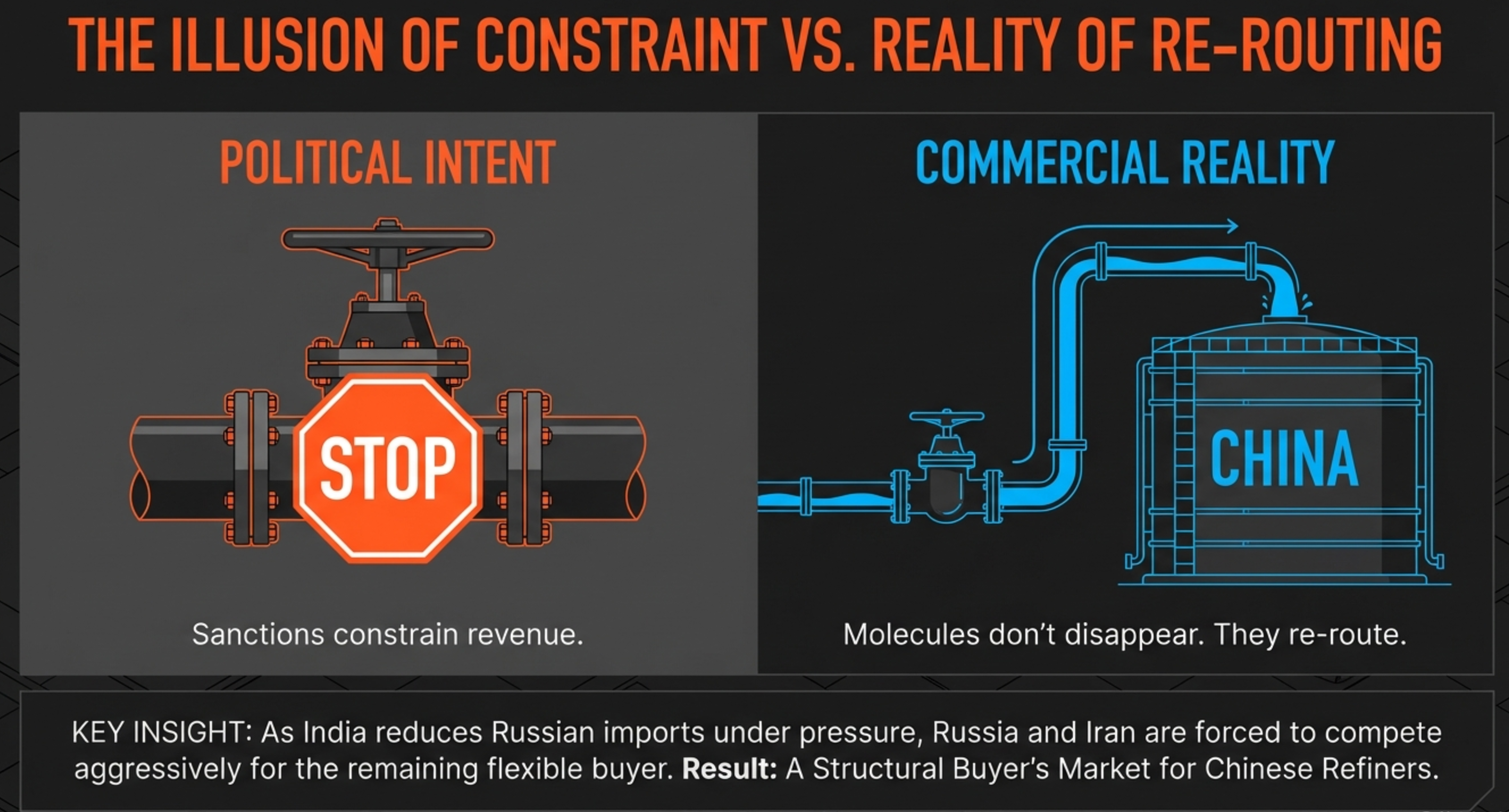
With India reducing imports of Russian crude under diplomatic and commercial pressure, Russia and Iran are now competing more aggressively for Chinese refinery demand. Both producers are offering steep discounts to Brent, creating a buyer’s market for Chinese refiners and traders.
This competition is driving larger volumes of discounted crude into China, particularly through independent refiners willing to take barrels that face constraints elsewhere. The dynamic is straightforward: as access to Western and some Asian markets narrows, sanctioned producers must clear volumes where demand remains flexible and of course price becomes the lever.
This is not a temporary dislocation. It is a structural re-routing of supply driven by policy, geopolitics, and commercial reality.
China as the Buyer of Last Resort — and Price Setter
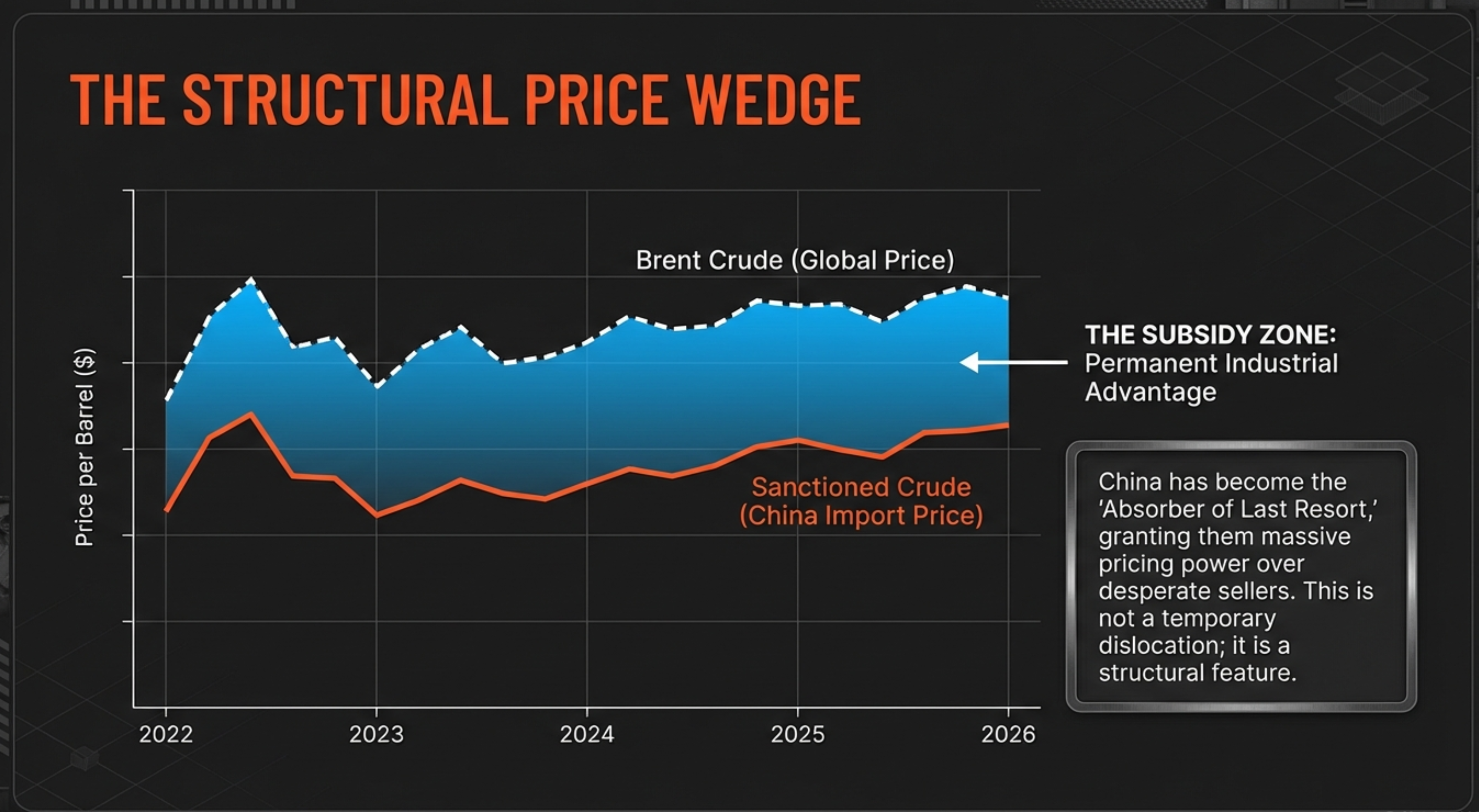
China has become the global absorber of last resort for discounted barrels. But that role comes with leverage. Like any market when multiple sellers compete for limited demand in one market, pricing power shifts decisively to the buyer.
This deepens China’s energy security at the margin while simultaneously lowering feedstock costs for refining, petrochemicals, and downstream manufacturing. It also reinforces long-term commercial ties between China and sanctioned producers, relationships that tend to persist well beyond the policy cycles that created them. Effectively these energy sanctions designed to cripple the Iranian economy and mitigate Russia’s aggression in Europe are reinforcing the Axis of Others who are more united than ever against the West.
For global energy markets, this concentration of discounted flows introduces distortions. Price signals weaken. Arbitrage widens. And supply discipline erodes as producers under pressure maintain output to preserve cash flow and strategic relationships.
The Manufacturing Flywheel Effect
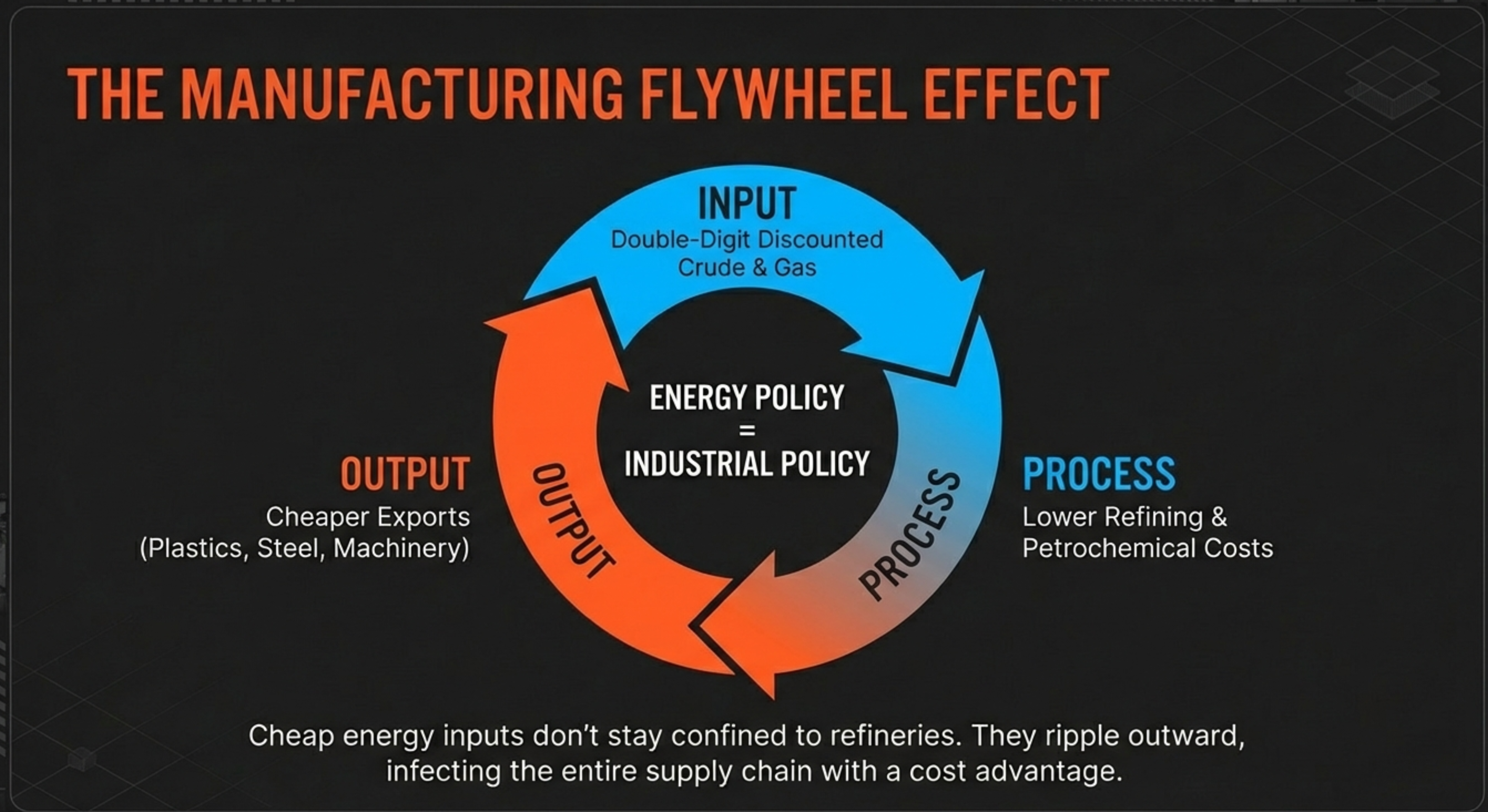
Cheap energy inputs don’t stay confined to refineries. They ripple outward into chemicals, materials, power generation, and heavy industry. When China secures crude at double-digit discounts, that advantage flows into:
- Lower-cost petrochemical feedstocks
- More competitive energy inputs for industrial production
- Improved margins on exports across machinery, equipment, and manufactured goods
At the same time, excess industrial capacity in China continues to seek global outlets. The combination of discounted energy + surplus manufacturing capacity is a powerful competitive flywheel — one that puts pressure on Western producers already facing higher energy costs, tighter regulatory constraints, and slower infrastructure development.
This is where energy markets and industrial competitiveness converge. The outcome is not abstract. It shows up in pricing pressure, margin compression, and lost share in global export markets. This cycle of advantages is playing out to strengthen China’s advantages more than it is weakening Iran or Russia.
The Only Durable Response: Relentless Focus on Lowering Energy Costs in the West
For executives operating in energy-intensive industries from refining, and chemicals, to metals, manufacturing, and logistics — the geopolitical debate is almost beside the point. The practical reality is this: China is locking in structurally lower input costs through discounted crude and advantaged supply chains, and that advantage flows directly into pricing power across global export markets.
If Western policy continues to restrict supply, slow infrastructure, and layer costs onto domestic energy systems, we are effectively subsidizing our competitors with cheaper feedstock and cheaper power.
Sanctions don’t eliminate molecules. They reroute them. And when rerouted barrels arrive in China at double-digit discounts, they translate into:
- Lower marginal cost for refining and petrochemical feedstocks
- Cheaper electricity and process heat for heavy industry
- More competitive export pricing across steel, chemicals, equipment, and manufactured goods
For Western firms competing globally, the response cannot be rhetorical. It has to be structural.
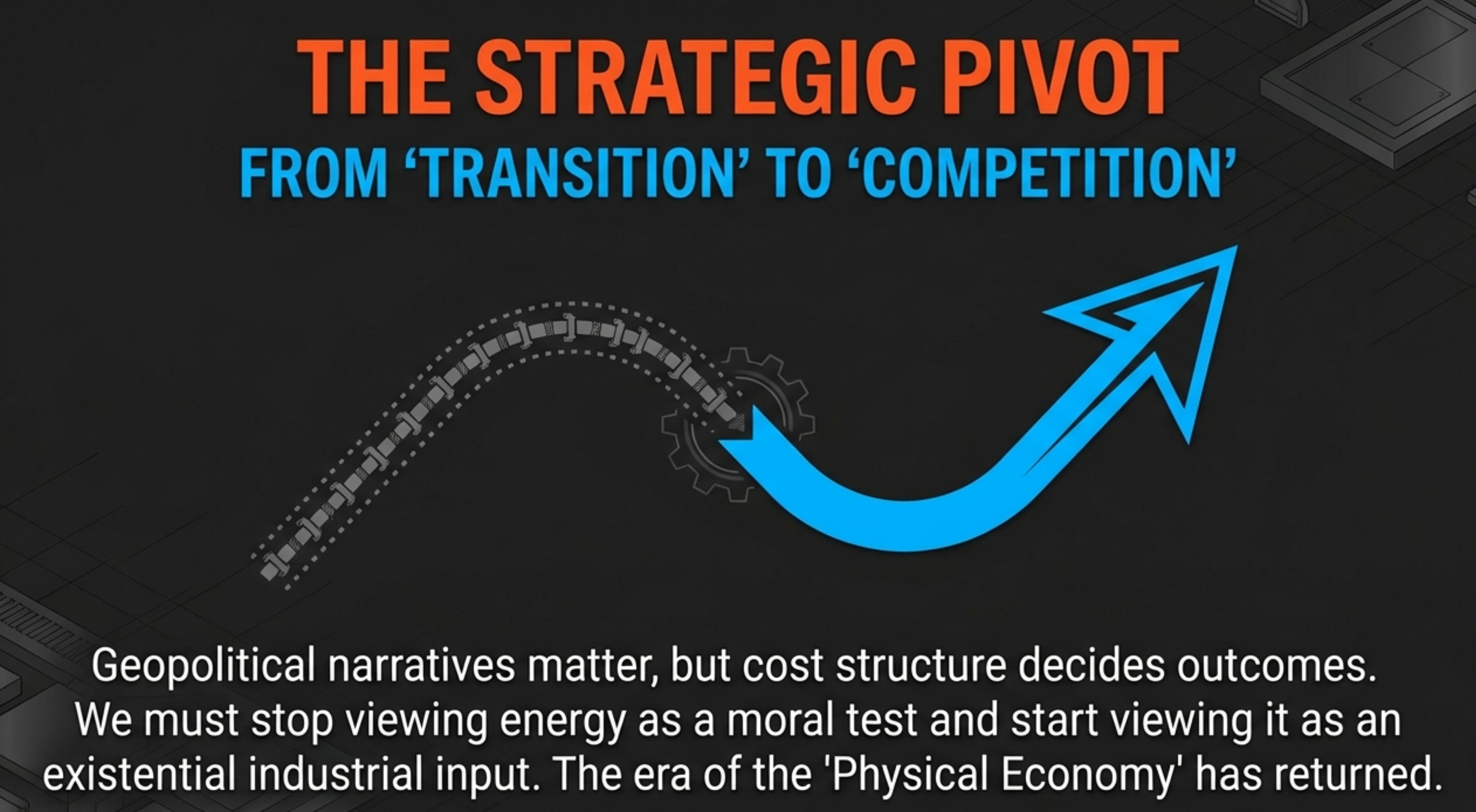
That means we need a relentless, pragmatic focus on lowering energy costs across the value chain, including:
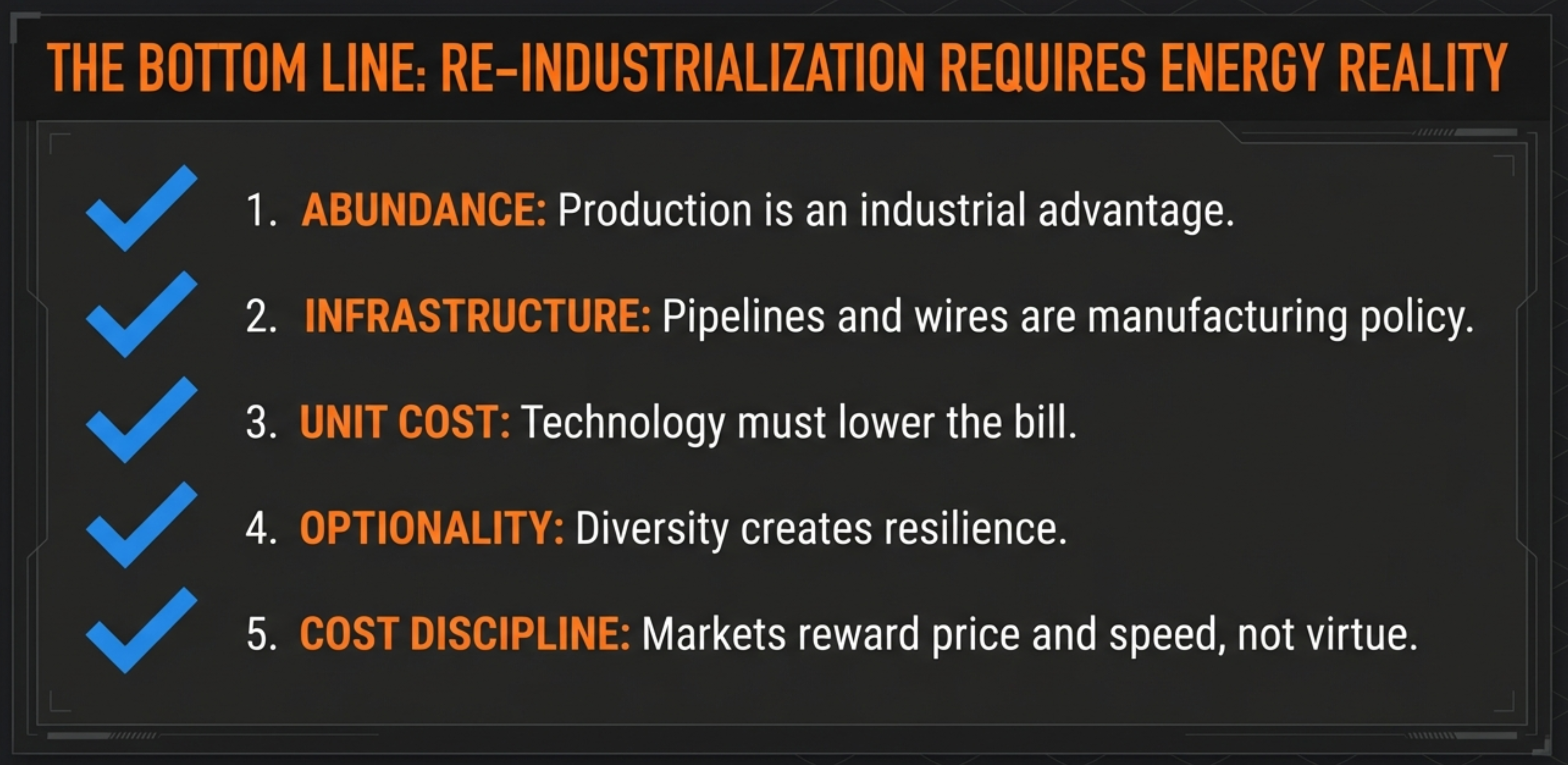
1. Abundance over Scarcity
Reliable competitiveness comes from energy abundance, not artificial constraint. This means expanding domestic production of oil, gas, power generation, and critical energy infrastructure like pipelines, export terminals, grid capacity, and storage, not throttling it. Cheap energy is an industrial advantage and in a world where competitors are already advantaged it is simply an existential input.
2. Infrastructure as Industrial Policy
Permitting reform, faster build-out of transmission, LNG capacity, refining upgrades, and logistics infrastructure are not “energy policy” issues — they are manufacturing competitiveness policies. Every bottleneck adds basis risk, volatility, and cost to Western supply chains.
3. Technology that Lowers Unit Costs (Not Just Emissions)
Electrification, efficiency, AI-driven optimization, advanced controls, and next-generation power (including nuclear and gas with carbon management) only matter if they lower the delivered cost of energy. Cost per unit of output is the metric executives care about.
4. Strategic Optionality in Energy Sourcing
Western firms need diversified, flexible energy portfolios — gas, LNG, power markets, on-site generation, storage, and long-term contracts — to reduce exposure to geopolitical price distortions. Energy strategy is now core to corporate strategy.
5. Competing on Cost Structure, Not Morality
Global markets don’t reward virtue; they reward delivered cost, reliability, and speed. If Western manufacturers operate with structurally higher energy costs than Chinese competitors fed by discounted sanctioned crude, the outcome is predictable: margin compression, offshoring pressure, and lost export share.
The uncomfortable truth is that energy policy is now industrial policy. And industrial competitiveness in the 2020s is inseparable from who can secure the lowest-cost, most reliable energy inputs at scale.
Closing Thought
Pressure on Russia and Iran may satisfy near-term strategic objectives. But markets adapt. When that pressure concentrates discounted supply into the hands of one dominant industrial economy, the long-term effect may be to strengthen the competitive position of the very system Western firms compete against daily.
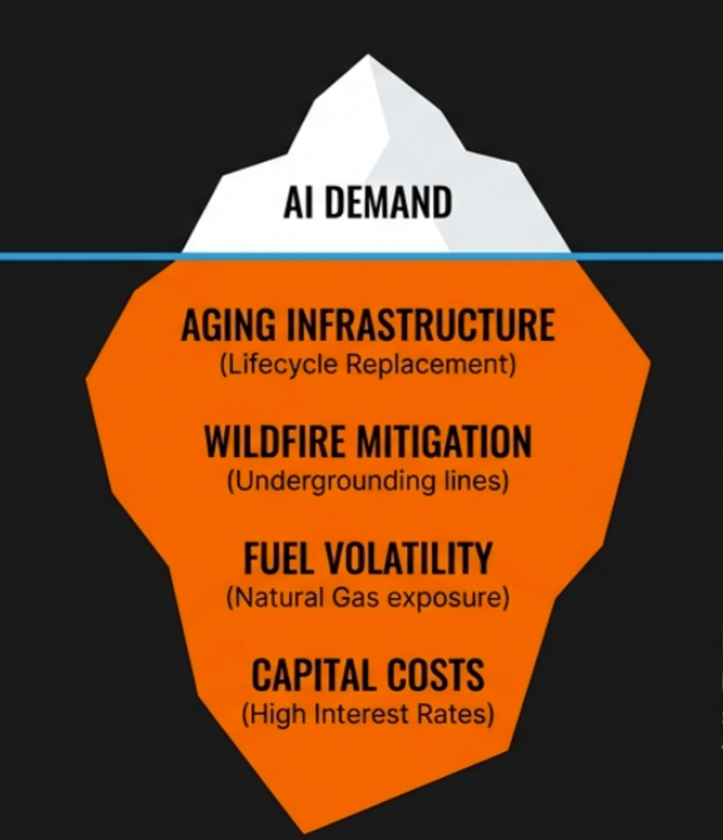
For executives, the implication is clear: geopolitical narratives matter, but cost structure decides outcomes. In a world of re-industrialization, AI-driven productivity, and intensifying global competition, affordable, reliable energy is no longer just a commodity input — it is a strategic asset.


 Thinking On Energy
Leave a comment