
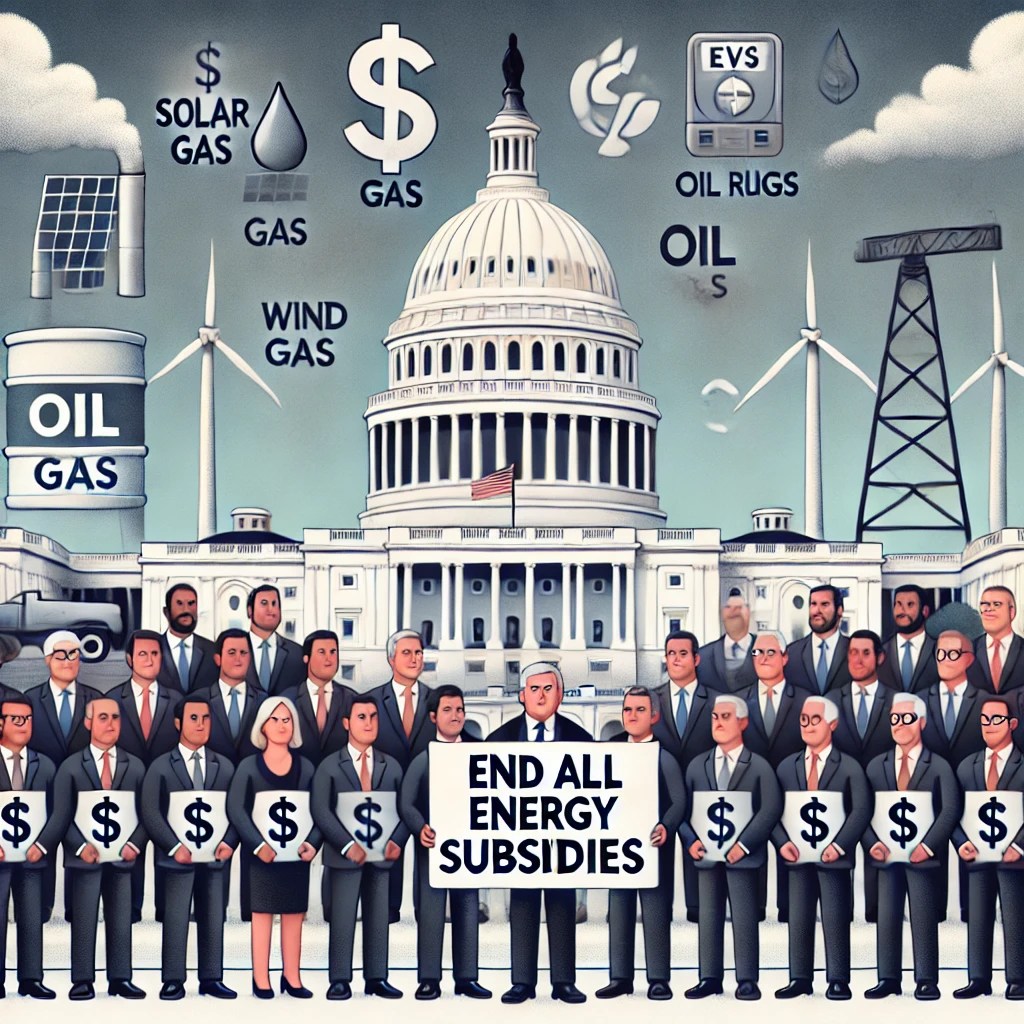
In a letter that’s already making waves across the energy sector, a group of 28 oil, gas, and energy executives have come out in principled opposition to the Inflation Reduction Act’s (IRA) energy subsidies—including those that directly benefit their own companies.
Their message to Congress is bold and, frankly, rare: repeal all IRA energy subsidies. No exceptions. I think this might have more weight if they called for an end to all energy related subsidies, period, IRA related or otherwise, but this is surely and interesting start on that conversation.
The argument is grounded in free-market fundamentals. The signatories argue that subsidies—whether for wind, solar, EVs, hydrogen, or carbon capture—distort market signals, reward inefficiency, and ultimately raise costs for consumers while reducing grid reliability. Their concern isn’t just about energy, either. They point to the long-term economic consequences of misallocating trillions of dollars into projects that can’t compete without indefinite government support.
It’s not hard to see why this letter stands out. In an era where lobbying for tailored incentives is standard operating procedure, these executives are essentially saying: our industry shouldn’t rely on political favoritism. That’s a message worth noting—regardless of whether you agree with their conclusions on specific technologies.
With the U.S. entering a critical phase of energy transition, this letter raises tough questions: Are we building a durable, competitive energy system—or one propped up by subsidies that shift with the political winds?
You can read the full letter HERE




 Thinking On Energy
Leave a reply to jean perarnaud Cancel reply